Part Two: Art
OOO
OOO
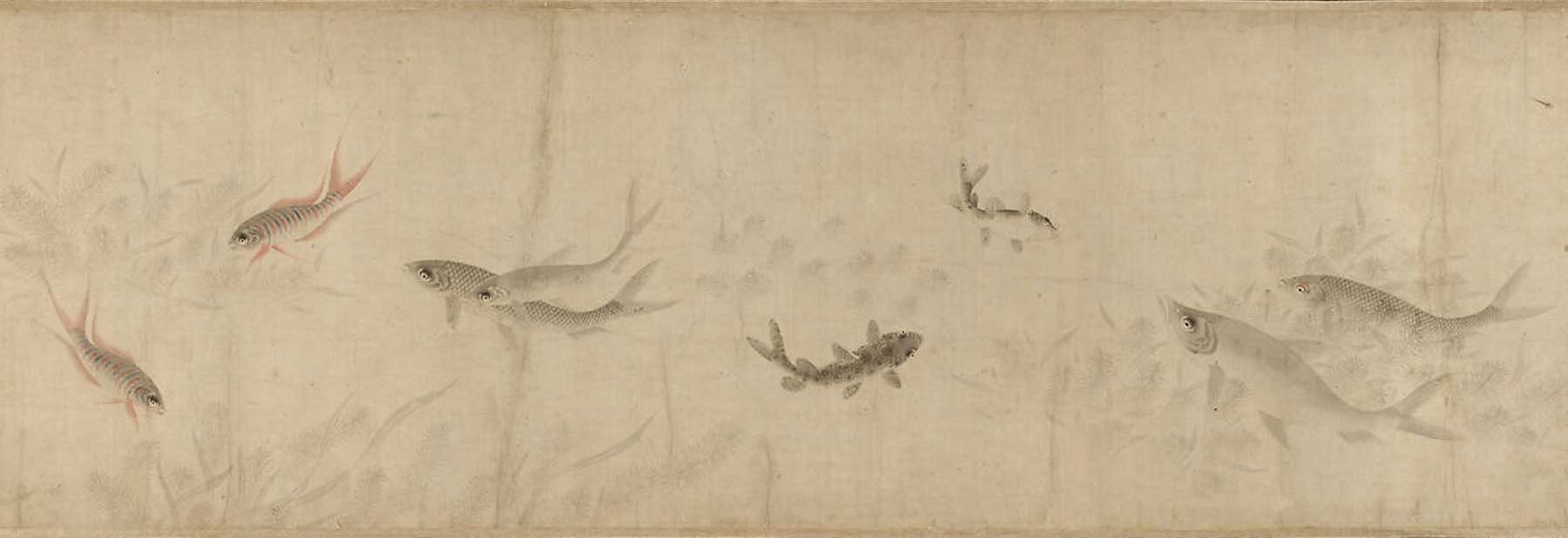
Zhuangzi and Huizi were strolling along the bridge over the Hao River. Zhuangzi said, ‘The minnows swim about so freely, following the openings wherever they take them. Such is the happiness of fish.’ Huizi said, ‘You are not a fish—how can you know the happiness of fish?’ Zhuangzi said, ‘You are not I—how can you know I don’t know the happiness of fish? Let’s go back to the beginning. You asked, “How do you know the happiness of fish?”—and in asking that, you already knew I knew it. I know it right here, on the bridge over the Hao River.
Chuang Tzu
…
Biopoetics: living reality is self-symbolic
The biopoetics of ecophilosopher David Abram and biologist Andreas Weber weave the subjectivities of the sentient world into a transformative vision of the human/nature relationship. The living world is rich in values, meanings and expressive communications. Ecosystems are webs of meaningful exchanges grounded in the core values of each being. Meanings are expressed in symbols that are also inseparable from embodied subjectivities. Every bird call, the twitching of a squirrel’s tail, the scent of a cedar tree, is a communication in a language that predates human speech.
By virtue of our animal bodies, we know this language even before we can form words. We can often recognize the messages of other beings through the feeling tone of their movements and vocalizations; even if we might not understand their precise grammar and syntax, their embodied expressions resonate sympathetically with our own feelings, like vibrating strings synchronizing across space.
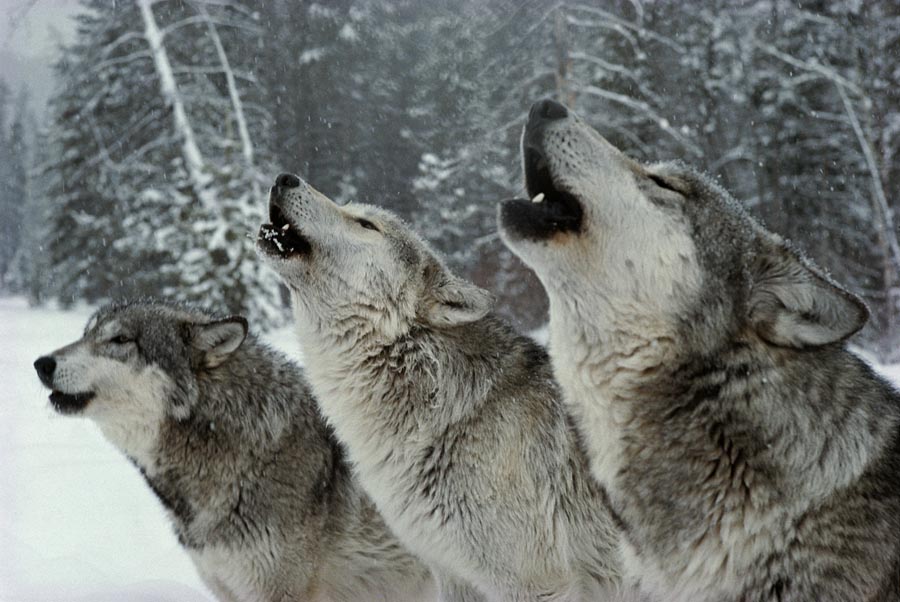
So it’s not mere projection to call a drooping plant sad, a playful puppy joyous, or a confrontational robin impudent. We might not know exactly what a wolf howling under the stars means, but we can be moved by the sound in ways that we can only articulate in poetry. The sixteen different calls of the chickadee required close and careful observation to decipher, while the underwater recordings of whale song speak of an alien form of life, but carry a poignant emotional tone that seems unutterably heartbreaking.
T]he music of meaning-making is both thought and feeling at once, and its notes are the rhythms and tone qualities of our bodily processes.” Johnson (175)
…
….
Art, consciousness, and qualia
[T]he animal voice is an organ of expression. Their calls are utterances of a self, as minimally conscious as it may be…Their voices are not proof of consciousness tied to language. but of a sensitive inwardness, which we also share as the core feeling of being alive. Melancholy and exaltation — these experiences might be the minor and major keys in nature’s music.
Andreas Weber “The Biology of Wonder” (208)
….
The feeling-rich and variegated experience of sense qualities — the greens of spring shoots, the fragrance of apple blossoms, the contentment of a full belly, or the fear in the eyes of a rabbit — has always presented a dilemma for philosophers and scientists. How does a particular wavelength of reflected light become the deep purple of a violet’s petals? How do the overlapping frequencies and rhythms of chirping crickets evoke a kind of joy, or the caw of a crow seem unsettling? When you try to analyze qualia quantitatively, their vividness disappears into the white space between digits. Even worse, qualia are context-dependent (as impressionistic painters knew): colors appear differently depending on the light, the weather, the other colors around them, even ambient smells and the mood of the perceiver. In a sense, to explain qualia would be to explain consciousness itself. But at some point, as Wittgenstein pointed out in his Philosophical Investigations, explanations come to an end.
From the perspective of biopoetics, qualia are so intimate because experience is the living body being touched by the world—and what bodies offer of themselves to the world. Weber writes that plants wear their souls on the outside (and what is “soul” but the subjective feelings of a sentient being?). Perceptions are like the body’s metaphor of things beyond the body; they are as inseparable and evanescent as mirror and reflection. We are now in the ineffable domain of art. And just as a work of art is it’s own meaning, defying complete explanation, so are the manifold expressions of living things: they are symbols of themselves.
…
…
Art and Eros
The language of music moves our souls because our inner tides are also pervaded by the same organic necessity. Weber (220)
…
All the concepts mentioned so far — autopoiesis, the survival imperative, embodiment, feeling, experience, subjectivity, value, meaning, cognition, consciousness, qualia — all these terms constellate in a non-dualistic space that resists reduction. They all seem to gesture towards something we could call a primordial, chthonic power — or, in the language of our distant ancestors: a god. Or at least a demigod.
OOO
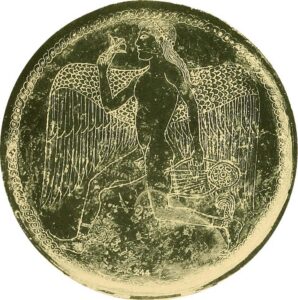
Eros
1: the Greek god of erotic love
2: the sum of life-preserving instincts that are manifested as impulses to gratify basic needs, as sublimated impulses, and as impulses to protect and preserve the body and mind
3a: love conceived by Plato as a fundamental creative impulse having a sensual element
b: erotic love or desire (Miriam Webster Dictionary)
…
“Eros” is a diffuse poetic term for the feeling of embodied life: not only sex, but any kind of passion, sensuous experience, beauty, joy, violence, despair, the grotesque, the sublime, and the ordinary. In Plato’s Symposium, the teacher Diotima explains that Eros is “a great spirit (daimon), and like all spirits he is intermediate between the divine and the mortal.”Eros has been somewhat disreputable in Western culture for a long time—rather as artists have always seemed a bit outré and out-at-heels to respectable society. According to Plato (himself a great artist), Eros was conceived at Aphrodite’s birthday party, the illicit child of the demigods Poverty and Plenty. And though he is very powerful, he is
…
…always poor, and anything but tender and fair, as the many imagine him; and he is rough and squalid, and has no shoes, nor a house to dwell in; on the bare earth exposed he lies under the open heaven, in the streets, or at the doors of houses, taking his rest; and like his mother he is always in distress. Like his father too, whom he also partly resembles, he is always plotting against the fair and good; he is bold, enterprising, strong, a mighty hunter, always weaving some intrigue or other, keen in the pursuit of wisdom, fertile in resources; a philosopher at all times, terrible as an enchanter, sorcerer, sophist. He is by nature neither mortal nor immortal, but alive and flourishing at one moment when he is in plenty, and dead at another moment, and again alive by reason of his father’s nature. But that which is always flowing in is always flowing out, and so he is never in want and never in wealth; and, further, he is in a mean between ignorance and knowledge.
Though Plato’s Eros is an urban spirit, his attributes identify him as a wild thing, like a coyote prowling the city. And as he is also an artist, gifted in rhetoric and enchantment, he is a suitable patron spirit of performance ecology. Eros’ song is dance music: the pulse, the throb, the beat; the yearning, the exaltation of expansion and the contraction of defeat. Eros withers under the cold gaze of analysis, and thrives when offered gifts and praise. Of course, we can often be uncomfortable about our animal nature; eros can sometimes seem perverse, inefficient, unprofessional, messy, and problematic. And eros inevitably brings us into the proximity of pain and death.
Still, if I could imagine the ideal relationship of art and science, it would follow the contours of the story Iain McGilchrist tells in The Master and His Emissary, in which the left and right hemispheres of the human brain perform complementary but divergent orientations: the left side specializing in sharp focus, details, and explanations, and the right side with its global perspective, bodily sensations, and felt values. The left hemisphere, he says, is a wonderful servant but a poor master.
Both are obviously essential — but in a better world than ours, the precision and formality of science would follow the “intuitive attraction to values and ideals”[265] and serve the holistic vision of the good, the beautiful, and the just. Art would not be science’s hungry hanger-on, and it would engage in creative synthesis more than critical deconstruction. I think that the sentient world might be able to teach us how to achieve that balance: the precision and clarity of logos alongside the aesthetic, sympathetic love of eros. Not as a methodology — or heaven forbid, a policy — but as a way of being.
….
….
A bird in the hand
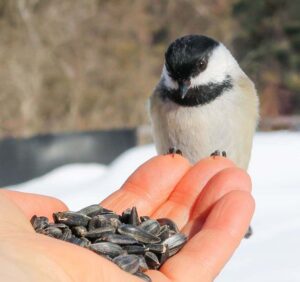
There is a nature preserve not far from where I live where the wildlife seems unusually comfortable around humans. I’ve had more close encounters with birds, fish, and deer there than in most other places. The chickadees in particular have learned that they can get handouts from hikers: the bold little birds sometimes follow you down the trail, chirping insistently. I’ve seen one eating birdseed out of a young woman’s hand. This is a well-known phenomenon; you can find many pictures of it on the internet. One winter on the trail I was having lunch when a black-capped chickadee came begging—and not subtly. I put a morsel in the palm of my hand, held it at arm’s length, and, in less than a minute, the bird had landed on my finger! But instead of eating, it pecked at my middle finger—with some annoyance, I thought—and flew away.
I tried to think like a chickadee. Maybe it felt uncomfortable going into a human’s palm, where it might be grabbed. I tried putting three pieces of food near my fingertips, tried again, and voila! The bird landed on my hand, snapped up a morsel, and flew away—closely followed by another bird, who did the same, and then a third time! Feeling a bit like Mary Poppins, I reflected that the chickadee had essentially taught me the correct protocol, thus enabling a mutually satisfying interaction.
Conservationists might disapprove of feeding wildlife, on the grounds that they should forage for themselves, and that humans can be dangerous. But I can’t help but rejoice in my encounter with the black-capped chickadee. It’s an instance of the kind of interspecies communication that could be incorporated into a new kind of human/non-human relationship akin to those practiced in many ancient and indigenous cultures. Chickadees are reportedly very alert and resourceful birds; the first to pick up on danger, and their variety of calls are taken up by other birds to alert the community. I’d like to think that they are smart enough to incorporate human goodies into their foraging without risking life and wing. Fleeting interactions like this invite a kind of mutual regard that is the beginning of intersubjectivity; they enact our identities as co-citizens of the sentient world. A bird’s trust is a tangible reminder that we can co-exist amicably on this earth. Such tiny moments are the very stuff of poetry.
…
A bird in the hand
feather-light, flame quick
Tell me what you want
my little chickadee.
What I give you
I get back three times in grace.
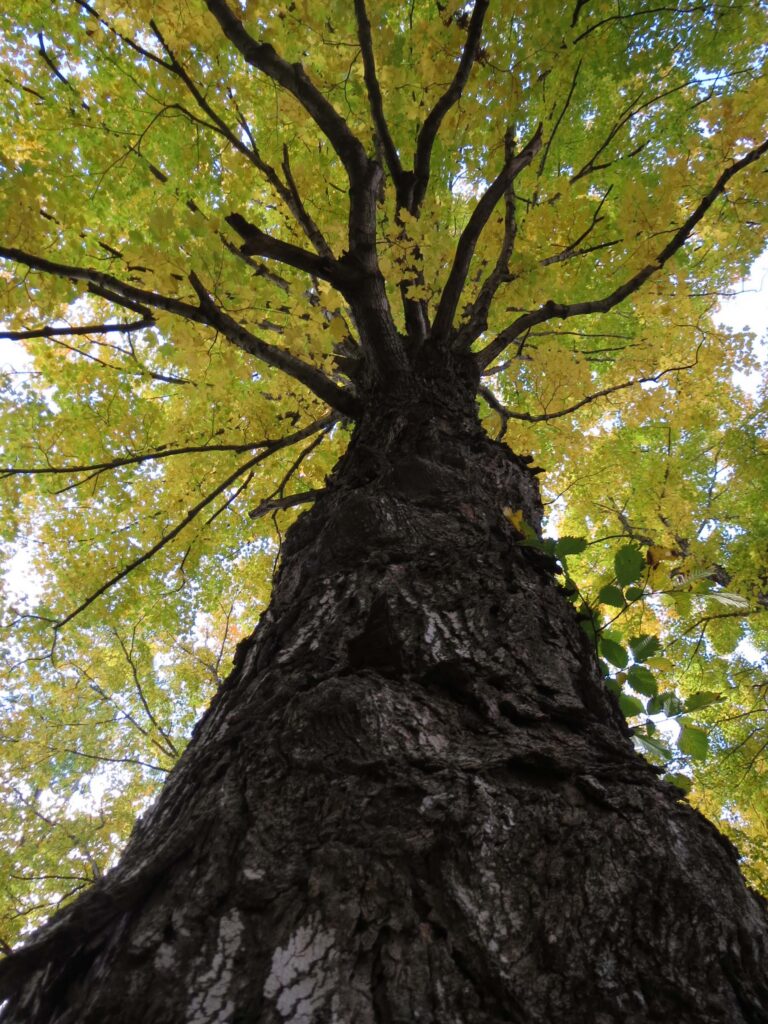
What happens when we encounter a wild sentient being? To hold a chickadee in your hand for a few seconds, to be scolded by a red squirrel, or gaze into the face of a raccoon, is an epiphany, literally, a visitation: a fleeting glimpse of another world. And the non-human reveals aspects of our humanity to us that we might otherwise never know about: in Beast and Man philosopher Mary Midgely argues that if we don’t understand our animal nature, we will never understand ourselves. Even attempting to get to know a tree in an intuitive, nonverbal way can bring about a relational epiphany. M. Amos Clifford, a wilderness guide and meditation teacher, writes:
When you form a relationship with a tree, you become part of its ecosystem. It also becomes part of your ecosystem. Its roots begin to reach into your imagination, and its branches become your spiritual shelter
“Your Guide to Forest Bathing”(120)
…
OOO
Towards ecological culture
For centuries, mechanistic science treated our bodily senses and feelings as obstacles to knowing reality. When we are taught that living things — even our own bodies — are machines, we are more likely to see them as things for material for use, not beings to have relationships with. Inter-species encounters keep us from seeing sentient beings as machines, and from becoming more machine-like ourselves. But when we perform a relationship with a non-human being, we become a different kind of person—perhaps no longer entirely modern. And judging from the trajectory of modernity, that could be a very good thing.
Technology has given us incredibly useful tools, but not all problems have technical solutions. The interweaving feelings, and multifarious relationships of living things call for a more intuitive, holistic approach; something to balance the cold facts of the cerebral cortex with the warm meanings of flesh, guts, and heart. And for that, the arts offer many time-tested instruments: stories, poetry, music, and performance (which, as poet Gary Snyder wrote, is “currency in the gift economy of the deep world”). I believe these arts’ potential has yet to be fully explored.
Creating a truly ecological culture will involve much more than just making paintings about climate change or poems about species extinction. It will more likely mean exploring creative ways to engage deeply with the sentient world, and letting the meanings we discover there change us. We can then experiment with creating artful forms that enact those meanings into cultural reality; to share them with our communities, our children. This could be a truly new adventure for artists and scientists alike: transforming our culture’s relationship with the living world.
Some future people, I hope, might tell their children the story of how their ancestors so cut themselves off from the feeling of life that they nearly destroyed themselves. These future people will certainly still practice science, with its necessary values of precise observation, measurement, and skepticism. But they will also recognize that the ambiguous, ever-changing subjective dimensions of life — colors, textures, scents, emotions, values, and meanings — are true, fundamental, and energetic facts. Fluent in the language of nature, these people will be able to pass their knowledge on to their children, not just with textbooks and equations, but also with cultural practices— stories, songs, performances, and care for the land — that honor and re-create their belongingness in the living world.
For the first time in two centuries, it’s scientifically respectable to acknowledge the sentience of non-humans. So it’s high time to heed Aldo Leopold, and learn to act like we belong to the community of the land. Our neighbors will be ready to teach us how — if we can be good students.
….