Part One – Somatic practices: being a human animal
“Only as we come close to our senses, and begin to trust, once again, the nuanced intelligence of our sensing bodies, do we begin to notice and respond to the subtle logos of the land.”
[David Abram “The Spell of the Sensuous”[268]
Imagine that you are walking along a fallen tree trunk. You’re keeping your balance nicely. Suddenly, someone asks you to solve a math problem, and you begin to teeter. Similarly, when your head is full of thoughts— plans, problems, memories—you are not paying much attention to the sensory details of your surroundings. It’s easy to tune out the vireo’s song, or miss the faint rustle of the snake gliding into the grass.
Embodied life is the truest magic we can know. Many modern people have mixed feelings about their bodies. They have their reasons — but it’s worth remembering that human bodies are animals; we carry within us the primordial knowledge of all our ancestors: microbes, worms, ferns, fish, lizards, and mammals.
Your animal body is your only way of connecting with the world. Sensing the pull of the Earth, the voluminousness of space, and the subtle fleshy pulse of sentient matter, we navigate this kaleidoscopic world with confidence and caution. Children are so good at being animal. Many of us modern people might need to unlearn some things and remember others. Somatic practices are very helpful for this: they are simple exercises for awakening the wild knowing that no one ever taught us.
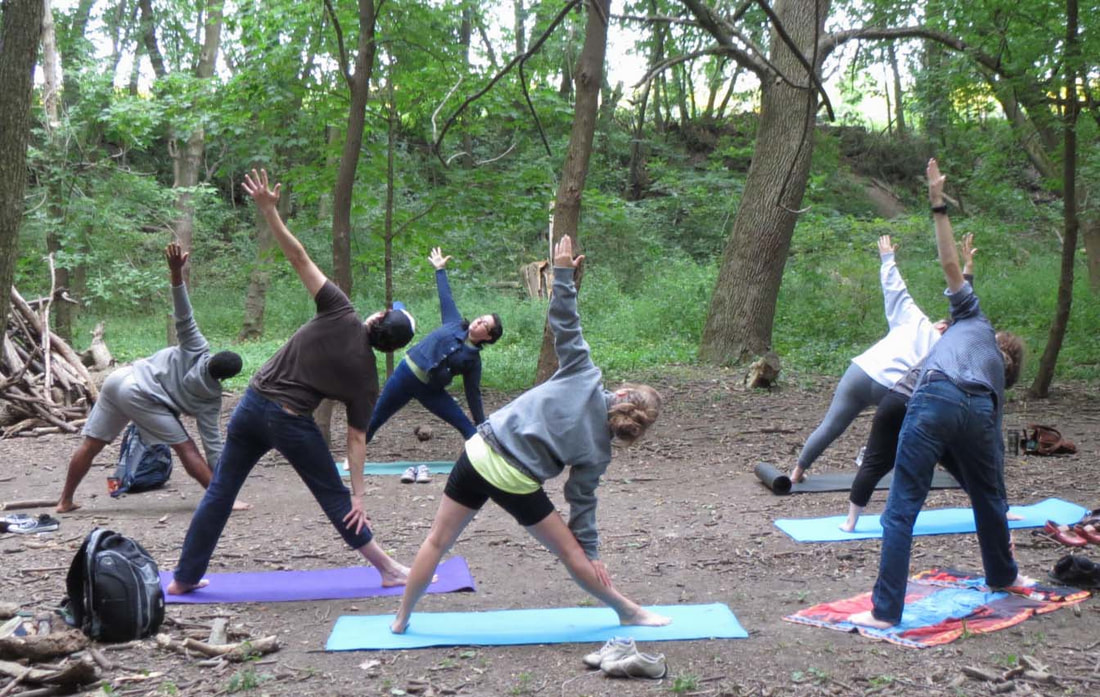
For performing artists, bodies are the instruments of their art. Like athletes, performers have to be familiar with getting in the “zone” where performance is natural and effortless. “Out of your head! Into the space!”, the Improvisation teacher Viola Spolin used to coach her improvisation students while they were practicing “space shaping” or “The mirror exercise.” There are many such artful and sophisticated body/mind techniques in the fields of somatic studies and dance. All of them are ways of synchronizing “body/mind.”
Many somatic practices have been developed for healing and wellness: tai chi, chi kung, yoga, Feldencrais, Alexander Technique, Authentic Movement, and Bodymind Centering, to name but a few. Each one offers a distinct style of cultivating the body/mind relationship. Any of them take on great richness when performed in a natural setting.
Since our bodies * are * nature, when we cultivate somatic intelligence, we cultivate our relationship with nature.
Yoga teacher Micah Mortali has developed a very useful program of exercises for enhancing nature sensitivity in his book “Rewilding: Meditations, Practices, and Skills for Awakening in Nature.”
“Mindfulness is the practice
of bringing attention
to what is happening
in the present moment.“
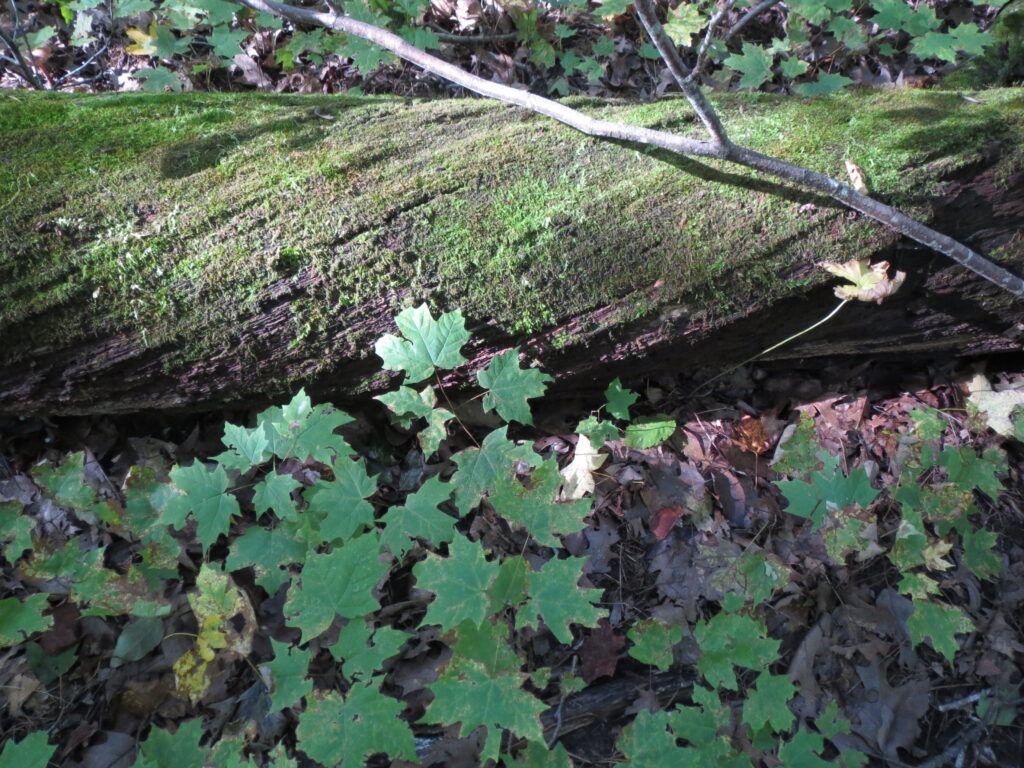
Practice: Mindful Breathing
Take a deep breath through your nose
Feel the cool air coming up; smell it
Feel it filling your lungs
Let your breath out slowly
As it goes out, relax into your body
Feel the warmth of your flesh
Do this a few times.
Then,
While you’re breathing out, notice your surroundings:
The colors, shapes, movement, sounds
Be relaxed and awake in the world
Let the woods be your teacher.
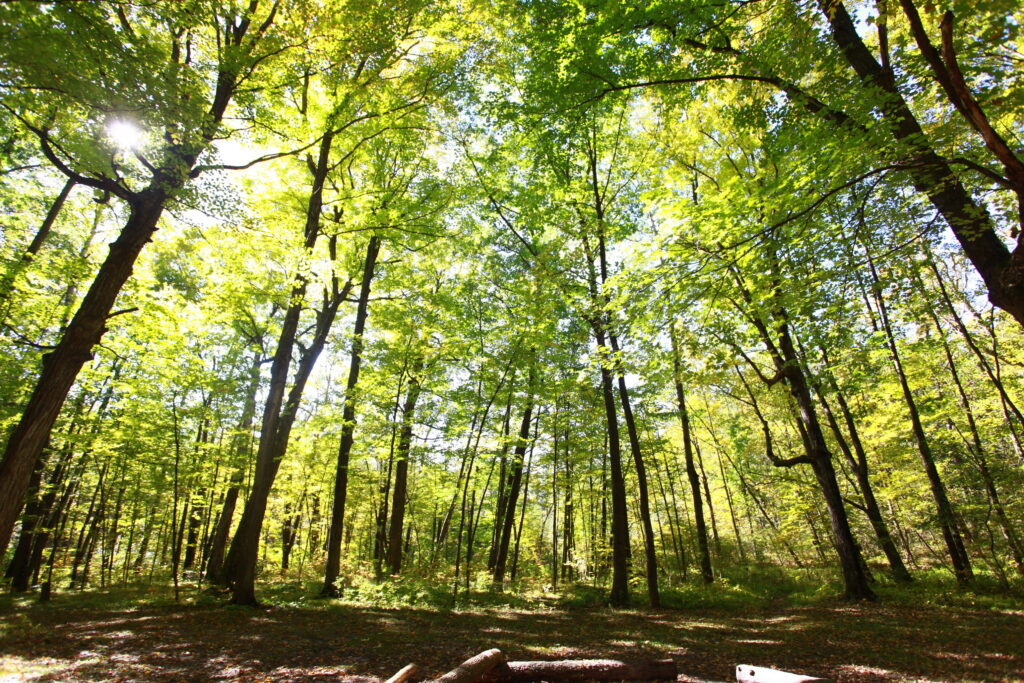
Your mind will drift and many thoughts
will arise. When they do, gently bring your attention back to noticing what’s in motion.
M. Amos Clifford
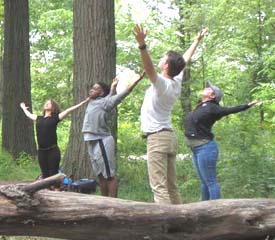
Practice: The Stand
Stand in the woods
Like a tree
Warmup: Let your arms hang at your sides as you stand upright.
Breathe, feet on the ground, and feel the Earth’s pull on your bones.
With a straight back, chin up, & strong shoulders,
Let a slight convex curve into the small of your back.
Relax and breathe
Turn your attention to the sounds, the smells, the colors, movement, and feelings.
Notice all the living things around you.
Stand with them for as long as you want.
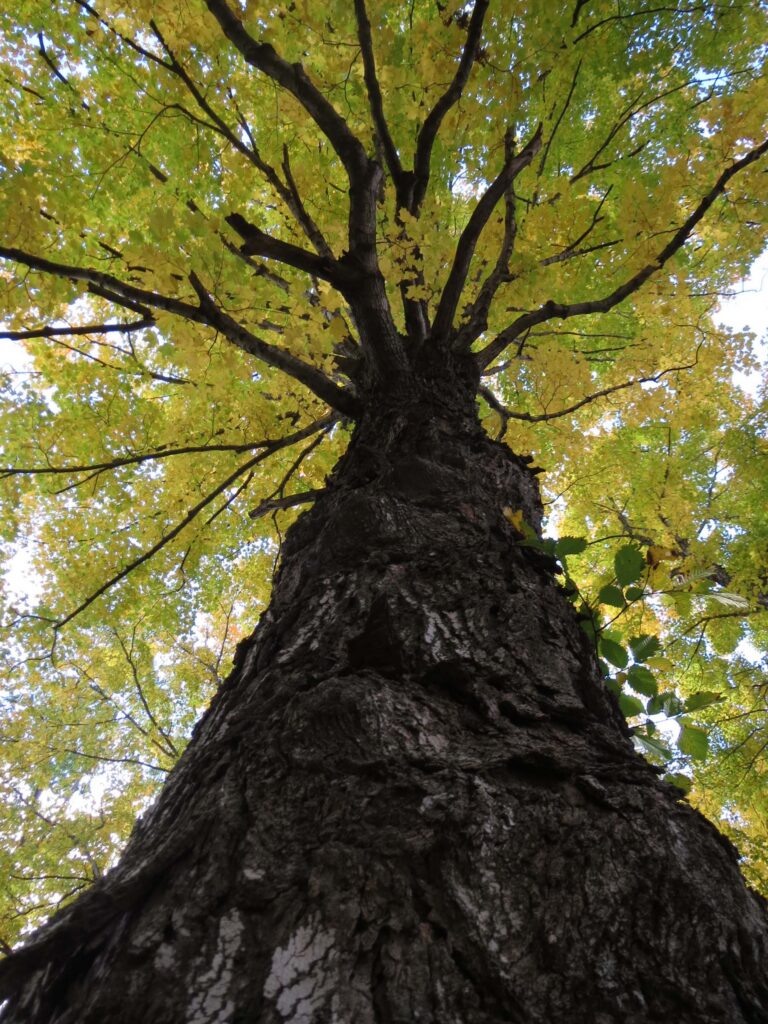

Part Two ~ Perception practices: exploring the living world
Tom Brown’s Guide to Nature Observation and Tracking, offers practical tips for “seeing more in nature . . .”
~ Back to Introduction ~